
Studies
How much weight do Brazil and Argentina carry in Premier League squads?
In current Premier League squads, Brazil is the most frequent non-European nationality (5%), and its league accounts for 3% of origins. Argentina represents 3% of nationalities, mainly in midfield.
Virtus Sports Group ·
The Premier League is, for many South American clubs, the reference market when the conversation turns to player exports. This four-panel series describes the league’s current squads (2026/27 season): the players’ nationalities, the leagues they arrive from, and how they are distributed by position.
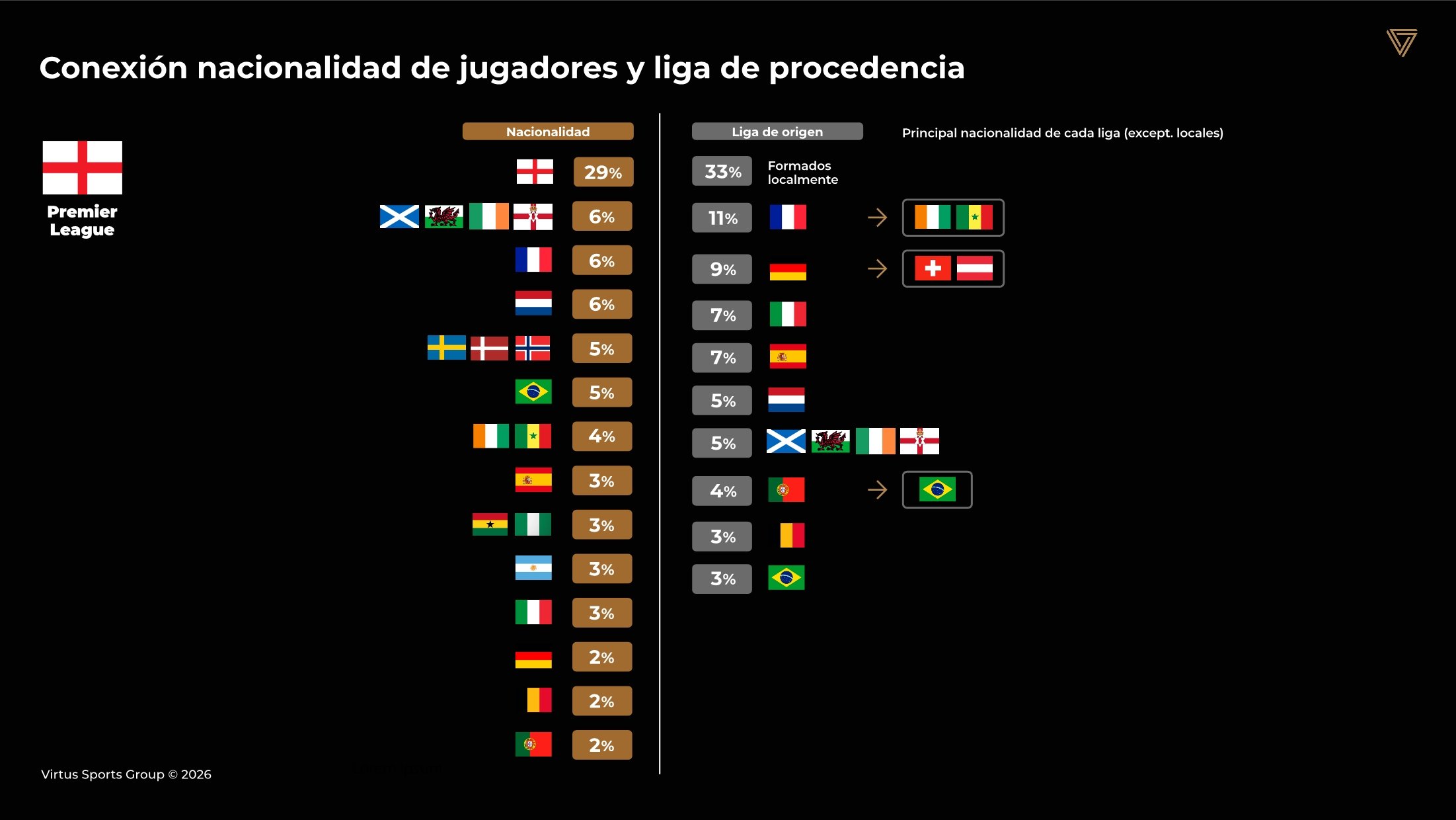
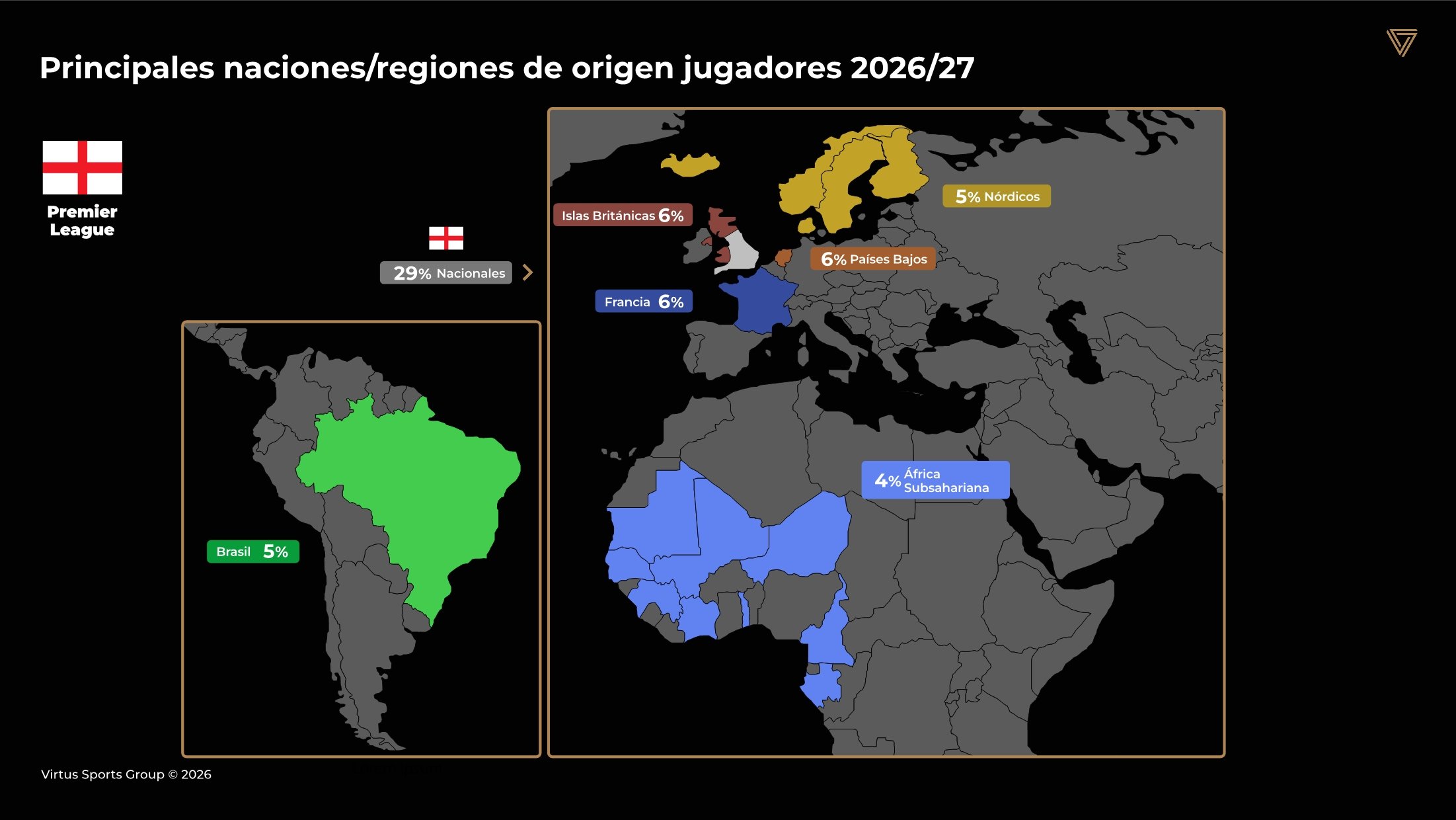
By nationality, England accounts for 29%. Next come the British Isles excluding England, France and the Netherlands, all at 6%; the Nordic countries at 5%; and Brazil at 5%, the largest non-European nationality. Argentina is at 3%, level with Spain and Italy. The origin map underlines the same cut: in South America, the highlighted block is Brazil, at 5%.
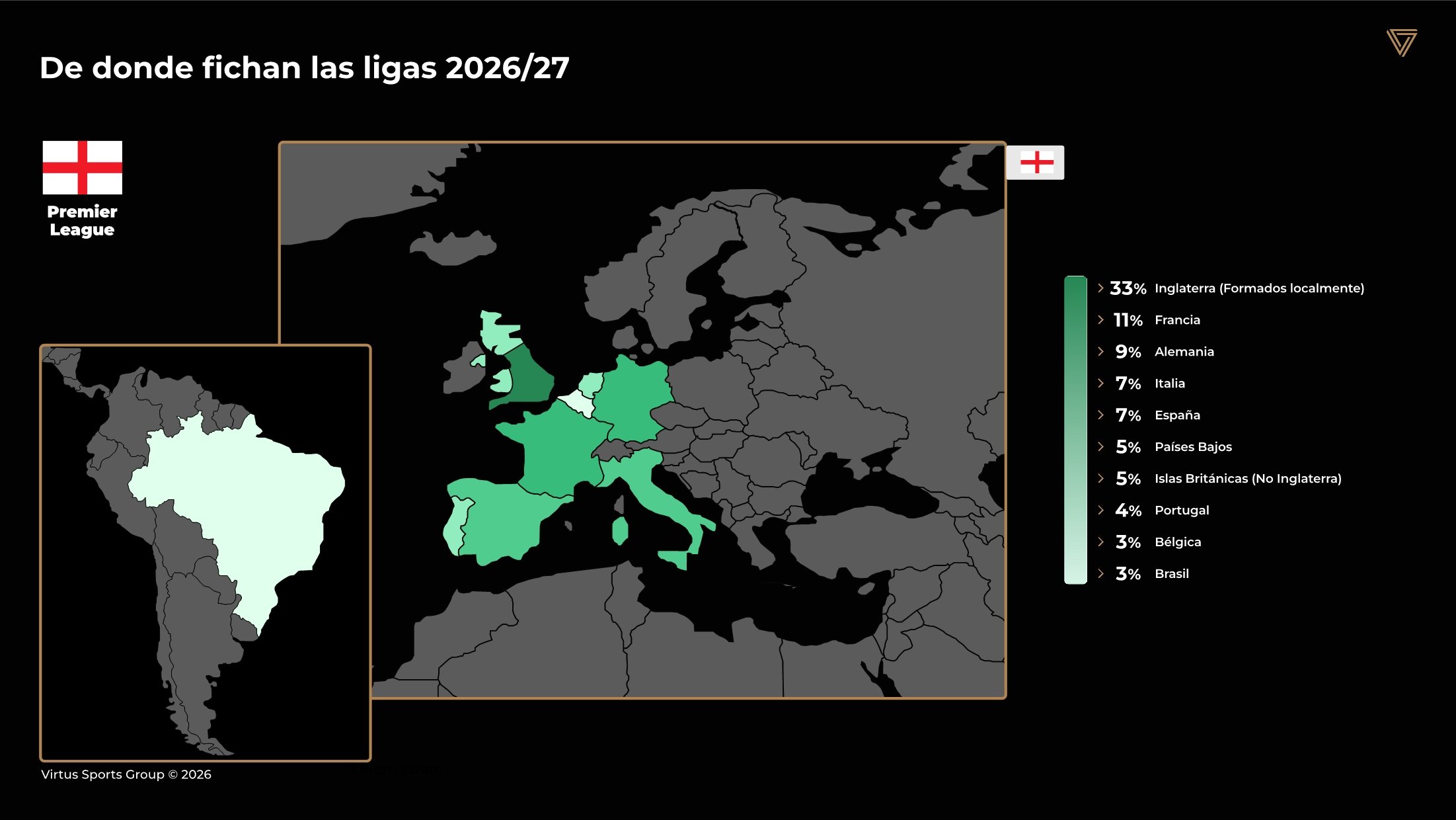
League of origin tells a slightly different story. 33% of players were developed locally, in England. Behind them come France (11%), Germany (9%), Italy (7%) and Spain (7%). Brazil appears with 3% of source leagues. Portugal, at 4%, shows up as a bridge: the main nationality associated with that league, other than locals, is Brazil. In other words, some Brazilian talent does not arrive straight from the Brasileirão, but from an intermediate market.
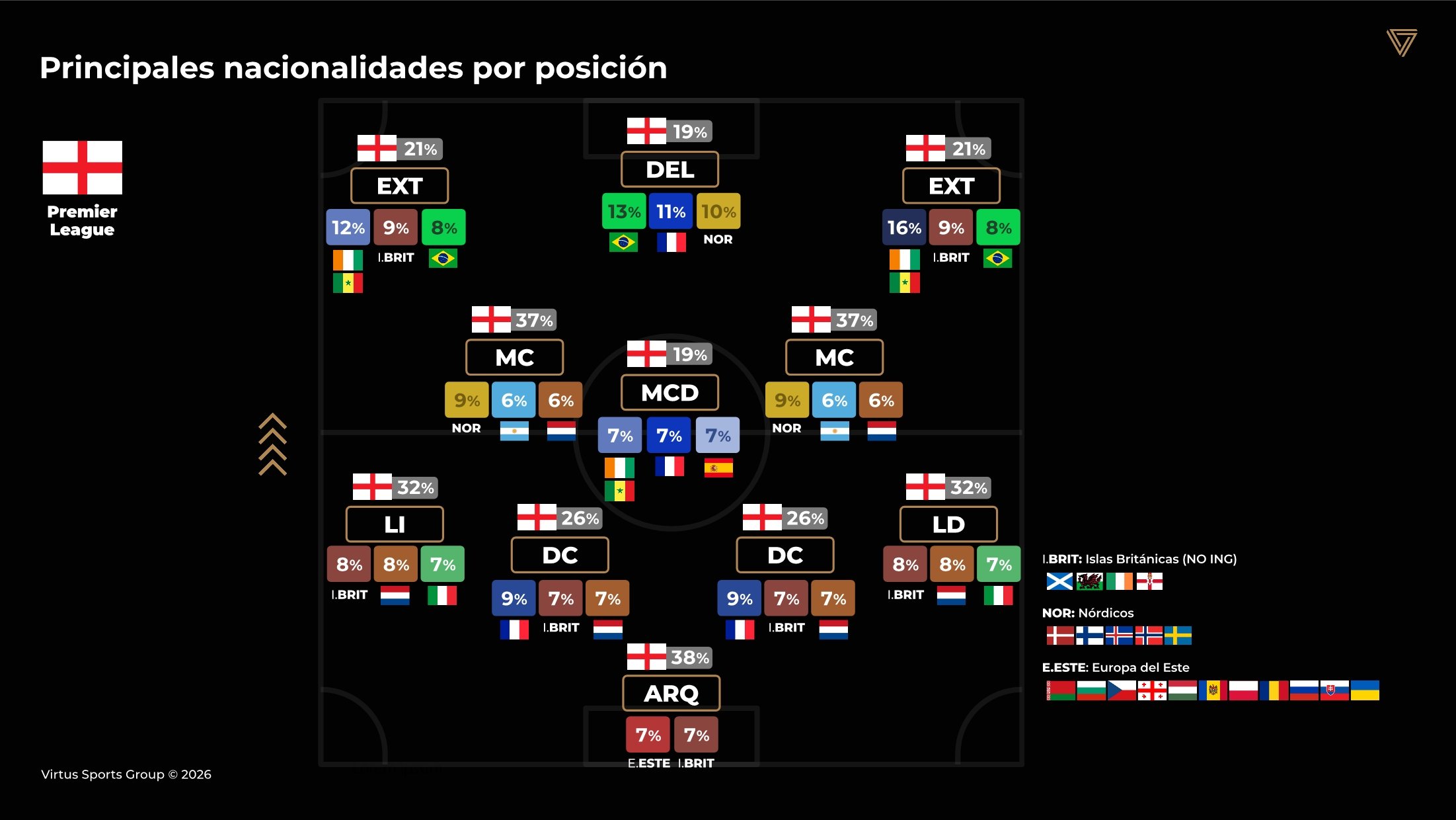
By position, Brazil is visible at centre-forward and on the wings. Argentina appears mainly in midfield. Goalkeeping and much of the defence remain dominated by English players.
The regional reading is not only about volume. Brazil has a footprint in Premier League nationality and a smaller one in league of origin; the gap suggests that the last club before England is not always South American. Argentina supplies fewer players, concentrated in one line of the pitch. For South American leagues and clubs, the data is useful for thinking about the value chain: which profiles are exported, in which positions, and through which bridge leagues, not only how many names reach Europe’s wealthiest league.
Infographic: Jaime F. Macías / Virtus Sports Group
Back to Studies